

There are geniuses in the modern world, and David Deutsch is one of them.
I am fond of saying that I only understand something if I can fit it into my mental map of knowledge – stories and narratives are fundamental and essential to my understanding of various issues. If you asked me to draw a map of Bangladesh, I would be unable to. I couldn’t even identify it if it was drawn on a blank paper.
But if you showed me a map of the world, I would be able to identify it instantly – because I know it is immediately to the east of India, the area formerly known as East Pakistan and formed by the independence and partition of India.
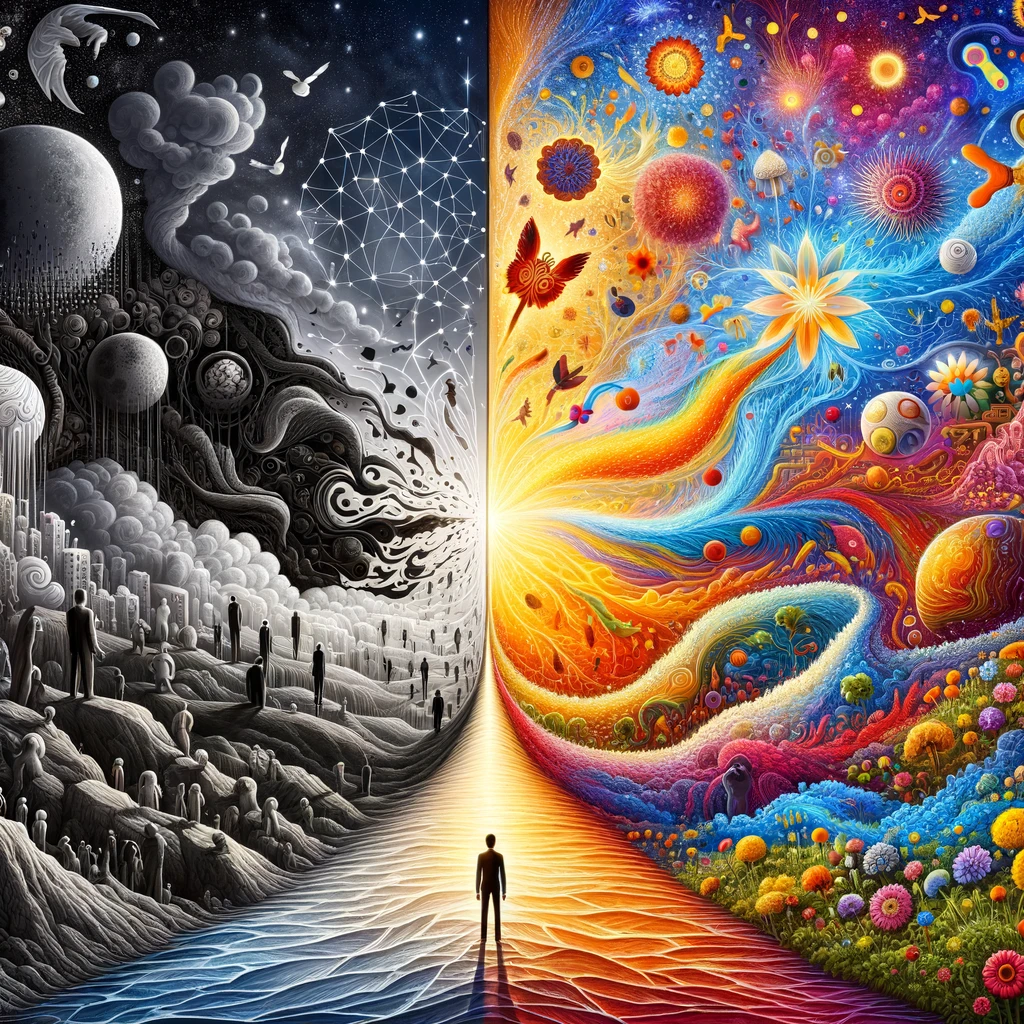
David Deutsch’s The Beginning of Infinity seeks to share a map of the world which I think is powerful and fundamentally different from my preexisting prejudices and framework. In that context, it is very confronting and challenging to comprehend – but I can see no faults in his logic about the transition from limited to unlimited worlds. In essence, The Beginning of Infinity is about transforming from a static system to a dynamic one. It is about fundamentally limited systems and fundamentally unlimited systems.
A monkey’s world is fundamentally limited. There’s no meaningful creation—let alone transmission—of knowledge through generations. As far as we can tell, monkeys have no capacity for abstract thought. But humans are different. We do have such capacity, and that capacity is fundamentally transformative.
This transformation is essential and fundamental to human knowledge and creates the possibility of human life breaking free of the shackles of the planet and star we are from. It creates the possibility for us to create art, goodness, and evil. It puts us on a path to infinity. Whatever origin story you believe in, there’s a point in history where humans left the path of all other creatures and started creating a radically and fundamentally different history.
Democracy as error correction
There was a second leap in the Enlightenment and Industrial Revolution, where humans again jumped out of the previously constrained civilisational limitations. After (basically) being subsistence farmers for thousands of years, the Dutch/British economic and political changes unleashed new forms of creativity on economic and political fronts. Those changes created the possibility of a modern prosperous world.
Deutsch’s ideas do not merely represent a way of looking at the world historically but also provide useful ideas on how to structure our communities today. His explanation of Anglo-style first-past-the-post two-party political democracy is similarly useful. His explanation of the two-party system (which substantially applies to most American and Westminster-derived polities) would be useful for the Isle of Man to listen to.
While he does not mention the Isle of Man by name, Deutsch’s ideas would be useful here: the Manx political system does not have political parties in the same style or power as UK/US/CA/AU/NZ – and thus, when the Manx Government fails and deserves to be changed, it currently isn’t very easy for voters to vote for the other mob. At the last general election, almost all of the Ministers of the Quayle Administration were thrown out of office, with only Cannan, Ashford and Allison being reelected. Yet, despite that administration’s demonstrated unpopularity, the second-most senior Minister has now become Chief Minister… And the only two other surviving ministers have both served as Treasury Ministers!
This is very different in the other Westminster-derived jurisdictions. If you are unhappy with the UK Conservative Government, you can easily vote for the other mob. If you are unhappy with the Australian Labour Government, you can easily vote for the other mob. But how can a Manx voter vote to change the Manx Government?
The result in the other Westminster-derived jurisdictions is that the public can correct bad policies over time. This error correction is important: it allows the Government to improve its policies over time and ensures that the Government is broadly responsive to the views of the electorate.
This same affliction – non-responsiveness to the community – is the same problem that fundamentally limits democracy in the institutions of the European Union. Parties seem to earn votes in EU elections in accordance with their domestic popularity, with the result being that a fairly corporatist centre-right grouping dominates, with a similarly corporatist centre-left grouping being the second largest. When the UK was in the EU, I never heard of a normal human (one not consumed by politics) voting in EU elections on the basis of EU governance. Maybe such people exist – but they are sufficiently rare that there appears to be little meaningful responsiveness to the European public.
Objective beauty
While I have slightly different views about the metaphysical and spiritual world to Deutsch (I think the book of Genesis is a good metaphor for the creation of humanity), he does make a compelling argument for the existence of universal and objective beauty. One key piece of evidence he uses is the fact that flowers are beautiful and attractive to humans and bees, despite humans and bees not having a shared evolutionary understanding of what constitutes beauty. Shared evolutionary paths might explain why some mating calls and mating behaviours are attractive to certain animals – it makes sense that peacocks know what peacocks think is attractive, for example. Similarly, the shared evolutionary path of humans and dogs is similar: dogs that behaved in ways that were attractive to humans were allowed to survive, while others did not.
But how does a flower communicate attractiveness to both humans and bees? How does a poisonous insect communicate danger to many different types of animals? By sharing some universal information across species. This is only possible if beauty (and danger!) is communicated fundamentally and objectively. The search for objective beauty is another step on the path to infinity.
Discover more from Michael Josem
Subscribe to get the latest posts sent to your email.
