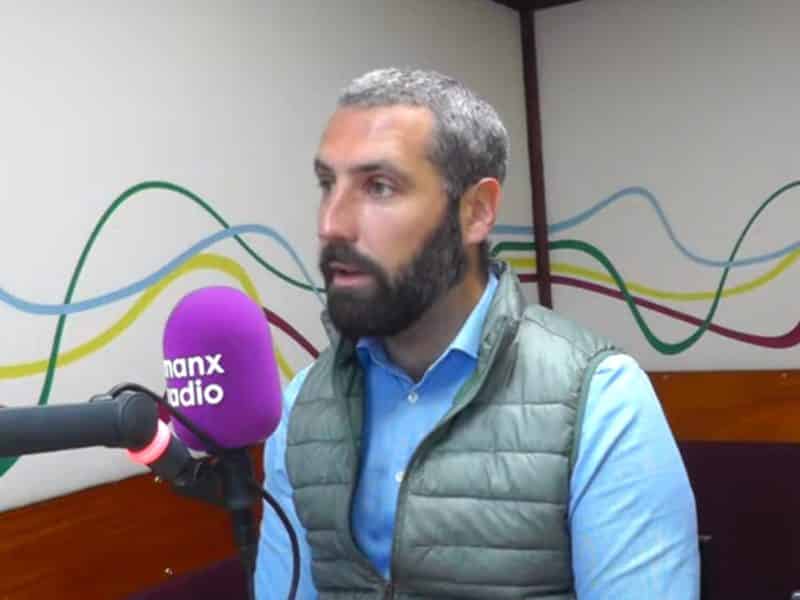
Michael Josem
- Email: michael@michaeljosem.com
- Phone: +61 458 556 736
- MSN: michael@michaeljosem.com
- AIM: aujoz
- Skype: michael.josem
Profile
Experience
- Sept 2010 - PresentSenior Manager, Game Security Team / PokerStars.comManaging teams responsible for combatting prohibited software and account sharing.
- Sept 2009 - Sept 2010Manager, Game Security Team / PokerStars.com
- Feb 2008 - Sept 2009Game Security Specialist / PokerStars.com
- Mar 2007 - Feb 2008Media Officer / Sophie Mirabella MP
- Feb 2006 - Feb 2007Electorate Officer / Bob Baldwin MP
- Jan 2004 - Dec 2005President / MONSU Caulfield
Education
-
2008 - 2012University of New South WalesMProfEthics in Ethics & Philosophy
-
2000 - 2005Monash UniversityBachelor of Arts (Policy Studies) in Policy Studies, PoliticsActivities: All
-
1987 - 1999Caulfield Grammar SchoolVCE
Additional Information
Updates
Updates
-
@billrini consistent with them buying Ptr team, who built a business based on theft
-
@timwilsoncomau I'm waiting for bluray so I can get high def Malcolm Tucker. I want to see every vein in his forehead.
-
@billrini I agree with you, but the cheap jibe about who is paying the review's fees is stupid and ignorant.
-
@AgentMarco does that mean you are furiously refreshing wiki pages in protest?
-
@NoahSD embarrassing
-
@JonFriedberg @Kevmath I'm not convinced the Chinese method of creating time zones is going to be very popular in the US.11 days ago from web | Reply, Retweet, Favorite
-
@juliancole just ask a dad
-
@Barry_Carter it is in Australia
-
@clayton27 using PokerStars services in US airspace and US territorial waters is prohibited. (and that of us territories like Guam etc)
-
@NoahSD what sparked that?
-
@Barry_Carter secret meetings of French and Italian regulators? Presumably thats a reference to the public press release they issued
-
In Isle of Man, Taxi drivers know where your house is. In Australia, Taxi drivers don't know where Parliament House is.
-
@twoplustwoforum never underestimate the ability of regulators to make stupid rules with unintended consequences
-
@jeanriders you are correct. I think that is another tweet delayed eleven hours. Happy new year, dear. Should visit each other in 2012!
-
@jeanriders you are oftena woman ahead of her time. Twitter tries to compensate.
-
@robo180 Australian Cricket Media Manager, Lachlan Paterson, lost twin daughters this week as part of birth complications4 weeks ago from web | Reply, Retweet, Favorite
-
Classic Melbourne Christmas day- hot, cold, sunny, stormy, rainy, clear.
-
Fortunately got breath tested on one of the few Sunday mornings that I was sober at 9.15am
-
@J0N1 do you really want that public?
-
@ruperte Glad it's over :)6 weeks ago from web | Reply, Retweet, Favorite
Posts
mjosem posted a photo
Posts
His argument is based on the wrongful thinking that somehow child care is too important to be left to the private sector. The fact that child care is important is precisely why it should be run by private operators - private operators that are wholly dependent on providing good services to ensure that they remain in business. If a private operator provides a bad service, they go bust and a better option will replace it. If a government operator provides a bad service, taxpayers are slugged with higher taxes to keep propping it up.
Virtually every Government service here in New South Wales is failing - our roads are falling apart, our public transport is collapsing, our schools are failing, and our electricity is cutting out. Mr McClure's argument for increasing government control of our most precious members of our community - our children - is chilling in its ignorance and short-sightedness.
Of course, it's no coincidence that he benefits from a taxpayer funded stipend to advocate for his muddleheaded views. Some market-based accountability would be a good thing for academics too.
NoahSD writes a generally excellent article about trust, but the example of the kid in the rain isn't quite perfect.
It's not perfect because the people who stop to pick kids up are not randomly selected: there's a substantially higher risk of something being wrong if the driver stops to pick a kid up, compared with a kid (theoretically) forcibly stopping a random car.
This is useful in that if you are going to extend trust, it is best for you to do the selection of who to extend trust to. If you're at a coffee shop, and someone came up and asked to look after your laptop while you were at the bathroom, there's a good chance they have a problem of some sort. By contrast, if you are at the coffee shop and need to go to the bathroom, asking whoever is sitting next to you to keep an eye on your stuff is likely to be safe.
This is because the vast majority of people are honest (as Noah says) and you'd be unlucky to randomly choose a laptop thief.
A casino would rather have a player make lots of little wagers on a game like roulette, rather than one big one.
If a player makes lots of little wagers, then they're more likely to feed the money back through the system.
Let me give you the hot tip that if you walk into any casino in the world, and try to put $500million on red, that they won't accept the bet.
However, if you offered to make 500million bets of $1, they would jump all over you to accept the bet and you could probably have the CEO of the operation personally sing you lullabies to help you sleep.
Does that example help explain the effect of variance?
Think of a fish who deposits $100 into your hypothetical online poker room.
In this hypothetical thought experiment, the hands are entirely pre-determined, the results fixed, and you get to choose precisely how quickly/slowly the fish loses his money.
You have two options:
Option A: The fish gets all-in on the first hand for $100 thanks to your action hand, the total pot size is $200, and you take 50c rake ('cause it hit the cap). The fish loses the pot, the house takes 50c*, and the shark has a net profit of $99.50.
Option B: The fish and the shark don't have any action hands, but rather, has hundreds of hands. In this hypothetical example, they play 50 hands of poker, and the rake in the hands adds up to an average of 10c per hand. The fish eventually goes bust, the house takes $5 (10c * 50) and the shark has a net profit of $95.
If you're going to fix the result in this hypothetical thought experiment with the sole intention of making more money, which do you choose? Option A, where you have income of 50c, or Option B, where you have income of $5?
(*The house actually has a significant net loss because the house has to pay the transaction/deposit/withdrawal fees, software fees, support fees, and so on)
A common myth is that 'action flops' (hands where there is lots of betting) increase poker site revenue.
This myth exists because the people who propagate it have a fundamental misunderstanding of how transactional sites - whether it being gambling or poker or whatever - make their money.
Why action hands hurt the profitability of online poker sites
The people who make these claims don't even realise that what they are saying is self-contradictory.
You can't simultaneously claim that there are Action Flops (to increase betting) while claiming that the purpose is to keep bad players in the game longer. "Action flops" increase betting, and increase variance... and the greater the pot size and the bigger the variance, the faster the fish go bust.
This is like someone pointing at a green wall, saying it is black, and in the next breath, they're claiming it is white. Not only are both claims wrong and false, but they're also internally self-contradictory.
People can claim to have action flops (to generate action/rake) or people can claim that there's a plot to keep bad players in the game longer. You can have one or the other - not both, because one stops the other from happening.
All gambling operations - online or offline - make their money from churn. They make money by having people repeatedly wager it over and over and over.
So, therefore, a site would generally profit more from low variance situations than high variance situations.
Therefore - and this is now self-evident - a site is actually harmed by bigger pots. A site is actually better off (relatively speaking) with 100 pots of $1, than one pot of $100. The same principle applies to roulette, slot machines, and so on.
Now, what are "action hands"? Action hands are high variance situations: where the rake is capped and there is lots of betting. We have just proved that high variance situations are not good for the site, and therefore, we have proved that action hands are not good for the site. Thus, there is simply no motive for a site to generate action hands: if anything, there would be motive to generate anti-action hands.
....lol but last night i played in a 45 person Sit N Go and once I got heads up, I had a run at the end where in 4 consecutive hands I had: KK,KK,AA,KK .....seemed a lil fishy to me lol but hey i ended up winning the whole thing so no complaints here :)Response:
The fact that this stuff happens is evidence that the shuffle is random.
The fact that something that has just a small chance to happen, and subsequently does happen, itself suggests that the shuffle is truly random.
How can you expect something to be random, yet not sometimes give surprising results? By its very nature, something that is random should be unpredictable, as you (fortunately) discovered.
It makes no sense to suggest that predictable outcomes (in this case, nicely spaced big hands) are a part of any random process.
Statistics, and randomness, are, I think, two of the most poorly understood subjects in our society, and it's poorly understood because truly understanding this stuff runs directly contrary to billions of years of evolution.
In short, our brains are hard wired to identify patterns quickly, and rely upon those judgements. If our forebears saw a lion running quickly towards us, they needed to very quickly identify it as a threat, plot a likely path of the lion, and get out of the way... and if they didn't identify this pattern, they'd die pretty quickly. Consequently, the only people alive today are the descendants of people who were good at identifying patterns.
However, this same pattern-finding ability in our brains is what messes things up. Precisely the same thing happens in poker - people see several similar hands in a row, and our natural pattern-finding habit kicks in... but this time, it isn't really there.
This is exacerbated by our mind only remembering those things that are notable.
For example, let's say the following hypothetical thought example happens. A random number is to be chosen between 1 and 10.
The first selection is 1.
The second selection is 2.
The third selection is 3.
What's the fourth selection going to be?
Human brains, by nature, identify the pattern above as the number increasing by 1 each random selection. They see a pattern there, even though there is none - because we're trained, through evolution, to recognise patterns very quickly, because recognising patterns keeps us alive.
It is common for conspiracy theorists to claim that they're just asking questions.
Instead of phrasing their offensive allegations directly, they ask them in questions.
For example:
I dont see why is so taboo to think that MAYBE the online poker companies cheat at some level. If I deposit money in some bank before I do that I think: "is it fair?". If I make business with someone I think: "is He honest?". If I play a soccer championship I think: "are these referee cheating?" Why is it so scary to think: "are poker rooms fair?" Why do you people that believe it IS fair get so scared, why do you think someone needs to be paranoid to think of that? |
Email the site you're concerned about, and ask them to address your issues. I think that'd be a good first step. You pay them rake - get them to explain how their shuffle works, get them to explain their safeguards against other risks, get them to help you understand whatever you want to know.
For example, one of the common theories that is spread around is that somehow the flop, turn and river is manipulated to favour particular players.
I've previously posted some extensive instructions on how to play at a site where such manipulation is impossible. Those instructions included contact details for regulators, and even some sample emails that could be sent in under 5 minutes.
Of course, as far as I know, not one of the conspiracy theorists ever took those simple steps.
Michael has recently moved to Sydney to join PokerStars, leaving politics behind. He now is working to catch people who try to cheat at online poker as a member of the PokerStars Game Security Team.
In 2008, during his trip to the World Series of Poker, he was interviewed by US 60 Minutes about his role in detecting cheating in online poker. It is available online at http://www.youtube.com/watch?v=mfhQO4DzLag
He lived in Wangaratta working with Sophie Mirabella, the local Federal Member of Parliament as her Media Officer.
Leaving Melbourne, Michael moved to Newcastle to work as an Electorate Officer with local Federal Members of Parliament, and Parliamentary Secretary, Bob Baldwin.
Michael graduated with a Bachelor of Arts (Policy Studies) from Monash University in late 2005.
Michael previously served as the President of the Monash University Student Union Caulfield Inc (MONSU Caulfield), a post he held from the start of 2004 until the end of 2005, and as a Director of Monyx Pty Ltd until the end of February 2006.
From 2001 to 2003 he was a part-time electorate officer for Senator Tsebin Tchen, while also serving as a student representative at MONSU Caulfield. In 2001, he was the Arts Faculty Representative, before being elected as the Education, Community & Welfare Officer for 2002. In 2003, he was the MONSU Caulfield Clubs Officer, during which he was elected as President.
In 2004, he also was a member of Monash University Council (and a member of its Resources and Finance Sub-Committee), and also Monash University's Academic Board.
During 2004, as part of 'Bluey Day,' he shaved his head to raise over $3,500 for cancer research in conjunction with Monash University, Caulfield Campus librarian Hui-Hsing Lin.
Often people refer to 50/50 situations in poker as being a coinflip. Here's an interesting post (with data) to argue that coinflips are themselves not perfectly 50/50. It does make sense, but coinflips are still pretty close to being fair.
A common myth is that there are such things as "Action Flops". There are a number of reasons that this is impossible at many online poker sites, but the idea of "Action Flops" is self-contradictory.
One person describes Action Flops as:
| The Action Flop Theory states that pros lose more often than they should to keep the newbs in the game. It supports the theory... that most seemingly disregarded out of hand, that the action is geared to get them to the money. |
You can't simultaneously claim that there are Action Flops (to increase betting) while claiming that the purpose is to keep bad players in the game longer. "Action flops" increase betting, and increase variance... and the greater the pot size and the bigger the variance, the faster the fish go bust.
This is like someone pointing at a green wall, saying it is black, and in the next breath, they're claiming it is white. Not only are both claims wrong and false, but they're also internally self-contradictory.
People can claim to have action flops (to generate action/rake) or people can claim that there's a plot to keep bad players in the game longer. You can have one or the other - not both, because one stops the other from happening.
One of the frustrations of the 'discussion' about the randomness of online poker is the 'hit and run' strategy of many critics. Various people come along, make unfounded claims about bizarre international conspiracy theories, have their theories comprehensively debunked, then never actually admit that they're wrong... instead, they just create another falsehood and spread it like gospel.
The problem is that many (but not all!) of the people who believe that online poker is rigged is that they have no critical thinking skills, and no self-criticism. It's as if when they are proved wrong (or something is proven contrary to their pre-existing prejudice) they just ignore it. I don't know if this is ignorant or willful blindness, but when you think about it, this sort of behaviour is the same sort of behaviour that generates this bizarre self-confidence that there is a massive international conspiracy out to defraud them.
There are fundamentally two "possible" reasons for someone to lose at poker over the long-term:
1) Their opponents are better than they are.
2) There is a massive secret international conspiracy out to defraud them.
One common strategy is to make false claims just by making stuff up:
| I've been doing a lot of reading this afternoon and played a tourney. The focus was on the ability to control the outcome and still pass RNG audits (RNG audits don't audit the software that process the output of the RNG), Action Flops, positions and odds. |
| PokerStars provided BMM with the source code for its RNG and shuffle, and software that PokerStars uses to protect the security of random numbers. BMM then subjected the source code and the output of the RNG to rigorous testing, including the Marsaglia Die Hard tests. |
| Cigital analyzed the source code, entropy sources and documentation for PokerStars' RNG implementation. In addition, a sample RNG output stream provided by PokerStars was subjected to - and passed - FIPS 140-1 testing. Using standard methods for exploiting RNGs and having full access to the source code, Cigital was unable to break the PokerStars RNG. Cigital found that the PokerStars implementation adheres to the current state-of-the-practice in generating random seeding values. |
Are these people ignorant to what the website says, or are they just lying? One or the other must be true. Which one is it?
Similarly, they make up fictitious studies to support their false claims:
| First, Cigital didn't audit the play money tables, and it's reasonably sound and repeatedly proven that the action on play money tables vs. real money is two distinctly different things. |
by David Sklansky & Alan N. Schoonmaker, Ph.D.
Many people have argued that poker should be considered differently from gambling in general. This argument has been made in discussions of legalization and related topics. Their argument is usually that poker is a skill game, while other gambling games are much less dependent upon skill.
We agree, but believe that they have not gone far enough in explaining many of poker's unique attributes. Poker does not just require skill. It demands and develops many skills and personal qualities which are essential for making all types of decisions, such as choosing a career, investing money, performing a job, and buying a house.1
POKER IS A GREAT TEACHER.
Research clearly proves that people tend to repeat rewarded actions and to discontinue punished ones. Poker teaches by rewarding desirable actions such as thinking logically and understanding other people and by punishing undesirable ones such as ignoring the odds and acting impulsively.2 Other learning principles also apply to poker.
Learning Depends Upon Feedback.
Rewards and punishments are valuable feedback. The faster and clearer the feedback is, the more rapidly you will learn. Unfortunately, for learning many desirable qualities the feedback cycle is slow or unclear. For example, if you make a mistake with an important customer, you may never know why you lost his business. At the poker table you often get much quicker feedback.
Until fairly recently, most people learned how to play poker primarily from trial and error. Over the past few decades a rapidly expanding body of books, videotapes, DVDs, classes, and coaches has helped millions of players to speed up the learning curve, but there is no substitute for experience. You have to make good and bad plays and get rewarded and punished to learn poker's most important lessons.
The More Frequently You Get Feedback, The Faster You Will Learn.
Most important real life decisions are made infrequently, and some of them - such as choosing a career - may be made only once. Poker players make and get feedback on hundreds of decisions every session, which greatly accelerates the learning process.
Lessons Learned In One Situation Often Generalize To Other Situations.
If poker's lessons applied only to how to play games, we would not have written this article. But its lessons apply to virtually every aspect of life. For example, if you are impatient or illogical or can't analyze risks and rewards, you will lose at poker, and you will make many mistakes in business and personal relationships. If poker teaches you how to control your emotions, you will be much more effective almost everywhere.
Young People Generally Learn More Quickly Than Older Ones.
Poker's enemies often insist that they are protecting young people from developing bad habits, but they are really preventing them from learning good ones. Young people love to gamble, sometimes for money, often for much more "things" such as grades, pregnancy, and even their lives.
They get a kick from taking chances, and some of their gambles are just, plain stupid. They risk dying or becoming crippled by crazy stunts on roller skates, bicycles, and snowboards. They get pregnant or AIDS by taking easily avoided sexual risks. It is as impossible to prevent young people from "gambling" (in its broadest sense) as it is to prevent them from experimenting sexually.
Life is intrinsically risky, and learning how to handle those risks is an important part of growing up. Poker teaches you to think of risks and rewards before acting. If it taught nothing else, poker would prevent some young people from making terrible mistakes. More generally, most of poker's lessons will help young people to make critically important decisions.
POKER IMPROVES YOUR STUDY HABITS.
Because you want to be respected, you and nearly everyone else naturally develop high status qualities and neglect low status ones. Unfortunately, status among Americans - especially young ones - is based primarily on physical attractiveness and athletic ability. The highest status people, the ones others envy and want to date, are physically attractive and good at games such as football, basketball, and soccer. Of course, the good looking, athletic children will probably end up working for the more studious ones, but they may not learn that lesson until it is too late.
American students score abysmally on tests of math, science, and verbal skills partly because so many of them think that study is unimportant. They are not stupider than Europeans, Asians, and South Americans, but they are taught from birth that they will be rewarded for looking good and playing athletic games well.
Worse yet, they learn that being studious is often punished. Their parents may be delighted when they get good grades, but young people care immensely about their peers' opinions. Good students are called "nerds" and "geeks."
This anti-intellectualism continues indefinitely. Americans reward good looks and athletic ability far more than studiousness. Models, actors, and athletes get paid several times as much and have much higher status than scientists, teachers, and scholars.
Young people resist studying math, psychology, logic, risk-reward analysis, probability theory, and many other subjects they will need as adults because these subjects seem unrelated to their lives. They don't see how learning them matters in the competitions they care about, the ones for status, popularity, and dates. Since people rarely study these subjects after graduation, many Americans never learn them.
Poker quickly teaches them the value of these subjects. The "nerds" who study poker and subjects such as math, logic, and psychology crush their more attractive and athletic opponents. They even beat smarter people who are too lazy or complacent to study. Winning increases their status and confidence and makes them much more likely to get dates and influence their peers. Poker doesn't just develop study habits and other important qualities; it also increases the value people place on them.
POKER DEVELOPS YOUR MATH SKILLS.
Americans are terrible at math. Our students get abysmal scores on math tests, and most people don't even try to learn math after leaving school. Their weaknesses remain uncorrected forever.
Many people are not just bad at math; they don't even want to get better. They essentially say, "Who needs it?" When they play poker, they quickly learn that they need it. The winners understand and apply it, while the losers either don't try or can't perform the necessary calculations. After their children started playing poker, many parents have exclaimed, "I'm amazed. He actually wants to study math."
POKER DEVELOPS YOUR LOGICAL THINKING.
Many authorities are appalled by Americans' contempt for logic. Instead of thinking logically, too many of us make poor assumptions, rely on intuition, or jump to emotionally-based conclusions.
Poker teaches you to respect and apply logic because it is a series of puzzles. Since you don't know the other players' cards, you need logic to help you to figure out what they have, and then more logic to decide how to use that information well. The same general approach that works in poker will help you to make much more important decisions.
POKER DEVELOPS YOUR CONCENTRATION.
The first step toward solving poker or real life problems is acquiring the right information. Without it you will certainly make costly mistakes. Poker develops information-gathering qualities, especially concentration. Every poker player has missed signals, including quite obvious ones, made mistakes, and then berated himself, "How could I be so stupid?" We can't think of a more effective way to develop concentration.
POKER DEVELOPS YOUR PATIENCE.
Americans are notoriously impatient, which damages many aspects of our lives. We owe trillions of dollars because we buy things on credit instead of waiting until we can pay for them. Our businesses overemphasize short-term results and lose market share to more patient foreign competitors.
Poker develops patience in the most powerful possible way. If you wait patiently for the right situation, you will certainly beat the impatient people who play too many hands. In fact, for most players poker's first lesson is "Be Patient."
POKER DEVELOPS YOUR DISCIPLINE.
Many people lack discipline. They yield to their impulses, including quite destructive ones. Poker develops discipline by rewarding it highly. Virtually all winning players are extremely disciplined.
Their discipline affects everything they do. They fold hands they are tempted to play. They resist the urge to challenge tough players. They avoid distractions, even pleasant ones like chatting with friends or sexually attractive strangers. They don't criticize bad players whose mistakes cost them money. They control their emotions. They have the self-control to do the necessary, but unpleasant things that most people won't do.
Television has created a ridiculously inaccurate image of poker. After seeing famous players screaming and trash-talking, viewers naturally assume that such antics are normal. They are utterly mistaken. Television directors show these outbursts for "dramatic value," and a few players act stupidly to get on TV. You will see more outbursts in a half hour of television than in a month in a card room. Please remember that controlled people are often called "poker faced."
POKER TEACHES YOU TO FOCUS ON THE LONG TERM.
Impatience is not the only cause for short-sightedness. Learning research proves that immediate rewards have much greater impact on people than delayed ones. For example, most American adults are overweight because the immediate pleasure of overeating is more powerful than its disastrous long-term effects such as heart attacks.
Poker players quickly learn that a bad play can have good results and vice versa, but that making decisions with positive, long-term expectation (EV) is the key to success. If you make enough negative EV plays, you must lose. If you make enough positive EV plays, you must win. It is just that simple.
If people thought more of the long term, some of our most serious problems would be solved or become less troublesome. Because of short-sightedness, millions of children drop out of school or get pregnant, and millions of adults neglect their health and finances.
POKER TEACHES YOU THAT FORGOING A PROFIT EQUALS TAKING A LOSS (AND VICE VERSA).
Economists call lost profits "opportunity costs" and they have written extensively about them. Unfortunately, most people haven't read their works, and, if they did, they probably wouldn't agree. They would much rather pass up a chance to make a dollar than risk losing one. They therefore miss many profitable opportunities.
Poker teaches you that lost profits are objectively the same as losses. For example, if the pot offers you 8-to1, and the odds against you are 5-to-1, you should call the bet. Not calling is the same as throwing away money by making a bad call when the odds are against you.
POKER DEVELOPS YOUR REALISM.
You and everyone else deny unpleasant realities about yourself, other people, and many other subjects. You believe what you want to believe. Poker develops realism in the cruelest, but most effective way. If you deny reality about yourself, the opposition, the cards, the odds, or almost anything else, you quickly pay for it.
Hundreds of times a night you must assess a complicated situation: your own and the other players' cards, what the others are going to do, the probability that various cards will come on later rounds, your position, and many other factors, especially your own and the other players' skill and playing style. If you are realistic, you win. If you deny reality, you lose.
POKER TEACHES YOU HOW ADJUST TO CHANGING SITUATIONS.
Most people don't ask themselves, "How is this situation different?" They just do whatever they have always done. Poker demands adjustments because the situation is always changing. One card can convert a worthless hand such as a four flush into an unbeatable one. The player holding the flush and all the opponents should adjust immediately. The player with the winning hand should do whatever will produce the most profit, and the others should cut their losses.
Other things are changing as well. One hand after being in the small blind, the worst position, you have the button, the best position. Every time someone quits and is replaced by a different type of player, the game changes. Every time someone surprises you by folding, checking, betting, or raising you should re-evaluate the situation and adjust to the new information.
Adjusting to real life changes has always been necessary, but it is has become much more important because the pace of change has accelerated enormously. We now experience more changes every year than our ancestors encountered in decades. Technology, the economy, social and moral attitudes, and a host of other factors change so dramatically that Alvin Toffler: "coined the term 'future shock' to describe the shattering disorientation we induce in individuals by subjecting them to too much change in too short a time."3 He argued, "Change is avalanching upon our heads, and most people are grotesquely unprepared to cope with it."4 Poker can help you to cope with our constantly changing world.
POKER TEACHES YOU TO ADJUST TO DIVERSE PEOPLE.
Most people - especially younger ones - have little experience with diverse people. They live in relatively homogenous towns and neighborhoods and usually relate to people who are fairly similar to themselves.
In online and casino poker games, you have to play with whoever sits down. You must compete against very different kinds of people: aggressive and passive, friendly and nasty, educated and uneducated, quiet and talkative, intelligent and stupid, emotionally controlled and uncontrolled, and so on.
You therefore learn how to understand and adjust to people who think and act very differently from you. The faster you and better you do it, the better results you will get. Since you will certainly meet diverse people in more important situations, learning how to relate to them is extremely valuable.5
POKER TEACHES YOU TO AVOID RACIAL, SEXUAL AND OTHER PREJUDICES.
Prejudice is always wrong, but it is especially destructive at the poker table. It causes you to underestimate your opposition and make expensive errors. To play well, you should be "gender-blind, color-blind, and just-about-everything else-blind, because in the end, winning is based on merit."6
Poker provides an extremely "level playing field." In no other popular competition is everyone treated so equally. You can't play golf against Tiger Woods, but you can sit down at any poker table. You can play against anyone from a novice to a world class player, and you will all be treated as equals. If you get the cards and play them well, you will win, no matter who you are.
POKER TEACHES YOU HOW TO HANDLE LOSSES.
Many people can't cope with losses. A lost job, argument, or - God forbid -romantic relationship is a massive tragedy. They can't accept the loss and may even obsess over it. It takes over their lives, making them look backward rather than forward.
Poker teaches you how to cope with losses because they occur so frequently. You lose far more hands than you win, and losing sessions and losing streaks are just normal parts of the game. You also learn that trying to get even quickly is a prescription for disaster. You have to accept short-term losses and continue to play a solid, patient game. You can't be a winner - in poker or life - if you don't learn how to get over losses and move on.
POKER TEACHES YOU TO DEPERSONALIZE CONFLICT.
Many people take conflicts too personally. They may want to beat someone so badly that they "win the battle, but lose the war." Worse yet, if they lose, they may take it as a personal defeat and ache for revenge. Anyone who has seriously played games with painful physical contact (such as football, boxing, and soccer) is less likely to take conflict too personally. Getting hurt teaches some athletes that conflict is just part of the game and life. Alas, many people never learn that lesson.
Poker teaches you to depersonalize conflicts because it is based on impersonal conflict. The objective is to win each other's money, and everyone's money is the same. It doesn't matter whether you win or lose to Harry, Susan, or Bob. Everybody's chips have the same value, and everybody's money spends the same.
Poker quickly teaches you that being bluffed, sandbagged, outdrawn, and just plain outplayed are not personal challenges or insults. They are just parts of the game. Poker also teaches you that taking conflicts personally can be extremely expensive.
If you ache for revenge, you may act foolishly and lose a lot of money. Beating "your enemy" can become so important that you play cards you should fold, try hopeless bluffs, and take many other stupid, self-destructive actions. The Chinese have a wonderful saying, "If you set out for revenge, dig two graves: one for him, and one for you." Poker teaches that principle to every open-minded player.
POKER TEACHES YOU HOW TO PLAN.
Many people don't plan well. Instead of setting objectives and planning the steps to reach them, they react impulsively or habitually. Poker develops your planning ability for an extremely wide range of time periods:
This betting round
This entire hand
This session
This tournament
This year
Your entire poker career
Planning for all of these periods requires setting objectives and anticipating what others will do. For example, pocket aces are the best possible hand, and you hope to build a big pot with them. In early position in a loose-passive game, you should raise because your opponents will probably call. In a wildly aggressive game you should just call, expecting someone to raise, others to call, so that you can reraise.
Poker also teaches you to plan for the entire hand. You use chess-type thinking ("I'll do this, they will do that, and then I'll …"). You may sacrifice some profit on an early betting round to increase your profits for the entire hand.
You can also sacrifice immediate profits for longer-term gains. For example, you may overplay the first few hands to create a "Wild Gambler" image that will get you more action on later hands. Or you may be extremely tight at first to set up later bluffs. Poker teaches you to set clear goals, think of what others will do, plan the actions that will move you toward your goals, and always know why you are doing something.
Good planning requires thinking of multiple contingencies. You should do many "what, if?" analyses. If the next card is a spade, you will bet. If it pairs the board, and Joe bets, you will fold. If it seems innocuous and Harriet bets, you will raise. Most people don't consider nearly enough possibilities. When something unexpected happens, they have no idea what to do.
Planning in real life is so obviously valuable and so rarely done well that we don't need to give any examples. You know that you should do these "what if" analyses and plan your work, finances, and life in general, but that you probably don't plan well.
POKER TEACHES YOU HOW TO HANDLE DECEPTIVE PEOPLE.
Many people are easily deceived. Just look at those late night infomercials that promise you'll quickly get rich, become thin, or relieve all your aches and pains. The promoters wouldn't pay for them if naïve people didn't buy them, and they are only the tip of the iceberg. As Barnum put it, "There's a sucker born every minute."
Because poker players constantly try to bluff, sandbag, and generally deceive each other, you learn how to recognize when someone has a good hand, is on a draw to a good hand, or is flat out bluffing Those skills can help you to spot and react effectively to deceptive people everywhere. A lot of people want to deceive you, and you should learn how to protect yourself.
POKER TEACHES YOU HOW TO CHOOSE THE BEST "GAMES."
"Game" selection is critically important in both poker and life. Poker teaches you how to evaluate yourself, the competition, and the overall situation, and then pick the "games" that are best for you.
Serious poker players recognize that the main reason they win or lose is the difference between their abilities and those of the competition. If they are better than the competition, they win. If they are weaker, they lose.
A secondary consideration is the fit between their style and the game. Let's say that two poker players have equal abilities. Player A will beat a conservative game, but lose in an aggressive one, while Player B will have the opposite results. Obviously, they should choose different games.
Both factors affect your real life results. If you are less talented or have weaker credentials than your competitors, you should switch to a softer game. You should also select a game that fits your style. For example, you and a friend may have similar abilities and credentials, but different temperaments. Perhaps you should work in a large organization, but he should join a small company or start his own business.
Most people don't know how to evaluate themselves and how well they fit into various "games." So they make huge mistakes that they may not realize for many years. Just think of how many people have changed "games" in their thirties and forties. They finally realized, "I don't belong here."
POKER TEACHES YOU THE BENEFITS OF ACTING LAST.
If you act last, you have a huge edge. You know what your opponents have done before acting, but they acted without knowing what you will do. Position is so important that any good player would raise with some cards in last position that he would fold in early position.
Poker is an information-management game, and there are many similar games such as selling and negotiating. The primary rules of all these games are:
Get as much information as possible.
Give as little information as possible.
For example, when negotiating, you want the other person to go first to learn his position before expressing yours. Let's say you have to sell an unusual house quickly. A licensed appraiser has said that it is worth approximately $250,000, but that it is so unique that he can't put a precise value on it.
Before offering a price, you want to know how this potential buyer feels. He may love, hate, or be indifferent to its unique features. If he makes the first offer, you get some inkling of his feelings. He may even offer $275,000! Since he seems to love its uniqueness, try for an even higher price.
Job interviewers know the value of acting last. Most employment applications contain a question such as: "Approximate starting salary expected." If you answer, you have given the interviewer your position without knowing what he is willing to pay. Since you are unlikely to get more than you ask for, try to avoid making that first offer.
POKER TEACHES YOU TO FOCUS ON THE IMPORTANT SUBJECTS.
Focusing on unimportant subjects causes expensive mistakes at the poker table and in real life. Serious poker players know that all mistakes are not created equal. Trying too hard to avoid small mistakes can cause much bigger ones.
Overreacting to any opponent's small mistakes can cause the deadly mistake of underestimating him. For example, you may see that an opponent overplays a mediocre hand such as queen-jack offsuit. It's a mistake, but a relatively harmless one, especially because he will get that hand only a few times a night. If he plays the other hands well, don't conclude that he is a weak player.
Your own mistakes should also be analyzed, and some of them can be quite subtle, but very important. For example, you may be so intent on playing "properly" that you seem too serious for the weaker opponents who just want to have a good time. So they avoid you, which reduces your share of the money they give away.
Another error is taking a "by the book" approach that can cause strategic mistakes. For example, you could play your cards in a technically correct way, but almost never bluff. You would lose the profit you could gain from good bluffs, and your opponents will not give you much action on your good hands. The same principle applies to always playing hands the same way. The predictability costs you more than you gain by always being technically correct.
A business analogy would be running your organization so rigidly that all the ordinary decisions are made well, but:
Your employees are not motivated to be creative when the usual routines won't work. In fact, they may fear being punished for violating procedures. Your organization can't respond effectively to the inevitable surprises. Your good employees quit. Your organization becomes a typical bureaucracy, filled with deadwood and unable to achieve its goals.
POKER TEACHES YOU HOW TO APPLY PROBABILITY THEORY.
If you are like most people, you don't think in terms of probabilities, or you do so very crudely. You think something:
will happen
won't happen
probably will happen
probably won't happen
You are unlikely to make finer distinctions such as between 30%, 20%, and 10% probabilities.
Poker teaches that these distinctions are important and develops your ability to calculate them. You learn that you should sometimes call a bet if you have a 30% probability of winning, but fold with a 20% probability. You also learn how to estimate probabilities quickly and accurately.
This neglected skill can be applied to many real life decisions. For example, if you have to fly to Los Angeles for a sales call or job interview, it may be worth the time and expense if the probability of success is 30%, but not if it's 20%. Hardly anyone thinks that way which causes many poor decisions.
POKER TEACHES YOU HOW TO CONDUCT RISK-REWARD ANALYSES.
These analyses are a more formal way to use probability theory. Since life is intrinsically risky, you probably can't win at poker or life without accurately assessing risks and rewards.
Risk-reward analysis is a form of cost-benefit analysis which also includes the probabilities of each possible result. Let's say that the pot is $100. You have a flush draw that you expect to win if you make it, but lose if you miss. It will cost you $20 to call the bet. The odds against making your flush are exactly 4-to-1. If you make it, you will win another $20 because you are sure your opponent will call one last bet. You are sure you cannot bluff. Should you call the $20 bet?
You will certainly lose more often than you will win, but the potential gains may outweigh the potential losses. Because we are concerned only with the long term, let's do it 100 times:
You will win $120 twenty times for a total win of $2,400
You will lose $20 eighty times for a total loss of -1,600
Your net gain for 100 times will be $800
Your expected value for each call is $8 You should obviously call the bet.
Poker players constantly do risk-reward analyses, and these analyses are often much more complicated. For example, in deciding whether to semi-bluff7, you should estimate the probabilities, gains and losses of:
winning the pot immediately because your opponent(s) fold
winning because you bet again on the next round and your opponent(s) fold
winning because you catch the card you need to make the best hand
losing because you get called and don't catch your card.
The math can get difficult, but advanced players learn how to make these analyses quickly and accurately.
The same sort of analysis should be done whenever you have a real life risky situation. Unfortunately, most people don't do it. They buy stocks or real estate, take a job, open a business, or take personal risks without identifying all the outcomes and estimating the probabilities that each will occur. So they make many bad decisions.
Poker is such an excellent teacher for risky decisions that Peter Lynch, former manager of The Magellan Fund and Vice Chairman of Fidelity, once said that a good way to become a better investor was to "Learn how to play poker."8
POKER TEACHES YOU TO PUT THINGS IN CONTEXT AND EVALUATE ALL VARIABLES.
People often ask poker experts, "How should I play this hand?" They are usually frustrated by the standard answer, "It depends on the situation." The expert then asks them about the other players, their own position, the size of the pot, the action on previous hands and betting rounds, and many other subjects. Most people don't want to hear, "It depends on the situation," and they definitely don't want to answer questions.
In fact, they usually can't answer them because they have not counted the pot, thought about the other players, and done all the other things that experts do. They want to know the two or three simple rules for playing a pair of aces, or a full house, or a flush draw, and the experts won't tell them because there aren't any simple rules.
If you play seriously, you will learn that the KISS formula (Keep It Short and Simple) does not apply to poker. More importantly, it does not apply to most significant real life decisions. It has become popular because people want to believe that life is much simpler than it really is. Poker teaches you to ask the same sorts of questions about investment, career, and other decisions that you ask at the poker table so that you make much better decisions.
POKER TEACHES YOU HOW TO "GET INTO PEOPLE'S HEADS.
"Poker teaches you to understand and apply psychology because understanding others is absolutely essential. In fact, poker has often been called "a people game played with cards." If you don't understand the other players, you can't win.
We have already discussed psychological subjects such as avoiding prejudice and selecting the right games. We will end this long essay by briefly discussing poker's most important psychological lesson: teaching you what other people perceive, think, and want.
The first step is shifting your focus from yourself to them, and poker forces you to make that shift. If you focus on your own cards, you can't win because poker hands have only relative value. The important issue is not how good your cards are; it is how they compare to the other players' cards. A flush is a very good hand, but it loses to a bigger flush or any full house or better. So poker quickly teaches you to think of what other people have. It also teaches you to think about what they think you have. And even what they think you think they think.9
We and others have written extensively about these subjects, but space limitations allow us to give only a few examples. Good players always consider the other player when making any decision. With the same cards and situation, they would fold if Charley, a very conservative player, bets, but raise if Mary, a very aggressive player, bets.
Good players would also think about how their opponents think about each other. For example, if a perceptive opponent bets into someone whom he believes is very likely to call, he is probably not bluffing. If a good player reraises a maniac, he probably has a much weaker hand than if he reraised a tight opponent. Understanding his perceptions of these other players greatly improves your decisions when you are contesting a pot.
Understanding other people is vital in virtually every area of life. You can't have good personal relationships or succeed in business without being perceptive about people. Since its value in personal relationships is so obvious, we will discuss only two subjects, negotiating and investing.
"The absolutely essential step toward negotiating effectively is to shift your focus from your own position to their position. Unfortunately, most people focus on their own position. Their actions say, in effect, 'If I could just get them to understand MY facts and MY logic and MY needs, they would make the concessions I need.' The other side is saying exactly the same thing.
"They therefore have parallel monologues instead of a genuine dialogue. Both sides repeat themselves again and again, hoping to convince the other to accept their position. But eloquence is no substitute for understanding, and you cannot gain that understanding without shifting your focus and sincerely wanting to understand the other side."10
All good poker players know and apply David Sklansky's "Fundamental Theorem of Poker."11 Less well known is his "Fundamental Theorem of Investing:"
"Before making any investment ... you must be able to explain why the other party is willing to take the other side of the deal... if you cannot come up with a good explanation, your buy, sell or bet is almost certainly not as good as you think."12
Unfortunately, most people don't seriously analyze the other party's reasons. Their attention is focused primarily on themselves, their economics, their analysis, and their reasons for buying or selling. If they thought about the other party's motives and perceptions, they might realize that they are making a disastrous mistake.
The principle is very clear. You should always determine as accurately as you can why the other party is willing to sell, buy, or do other business with you. If you don't understand his reasons, "all the statistics, income statements, balance sheet data, or analysts' recommendations mean little. There is still some reason they are taking your bet - and, if you don't know it, you don't like it."13
We could quote many other authorities on the value of understanding other people, but there is no need to do so. Instead, we will close with a quotation from one of the best selling books of all time: How To Win Friends And Influence People by Dale Carnegie: "If there is one secret of success, it lies in the ability to get the other person's point of view and see things from that person's angle as well as your own."14
Since you can't win at poker without seeing things from other people's angle, you will learn this valuable lesson. You will then become much better at winning friends, influencing people, and making decisions about virtually everything.
CONCLUSIONS
We have described many - but certainly not all - of the skills and personal qualities that poker develops. Most of poker's lessons are variations on one theme: Think carefully before you act. That principle applies everywhere, and far too many people ignore it.
The government's attempts to outlaw poker are based upon a misconception of its nature and value. It is not "just gambling," and it should not be subject to the same rules and penalties as other gambling games. Instead, the government should allow you to play poker in regulated and taxed places because poker is good for you and good for America.
SUMMARY OF POKER'S BENEFITS
Because this essay is so long, you may not want to reprint all of it. We believe that a good summary is simply a list of the headings. Please feel free to reprint as much or as little as you wish.
Poker Is A Great Teacher.
Poker Improves Your Study Habits.
Poker Develops Your Math Skills.
Poker Develops Your Logical Thinking.
Poker Develops Your Concentration.
Poker Develops Your Patience.
Poker Develops Your Discipline.
Poker Teaches You To Focus On The Long Term.
Poker Teaches You That Forgoing A Profit Equals Taking A Loss (And Vice Versa).
Poker Develops Your Realism.
Poker Teaches You To Adjust To Changing Situations.
Poker Teaches You To Adjust To Diverse People.
Poker Teaches You To Avoid Racial, Sexual And Other Prejudices.
Poker Teaches You How To Handle Losses.
Poker Teaches You To Depersonalize Conflict.
Poker Teaches You How To Plan. Poker Teaches You How To Handle Deceptive People.
Poker Teaches You How To Choose The Best "Game."
Poker Teaches You The Benefits Of Acting Last.
Poker Teaches You To Focus On The Important Subjects.
Poker Teaches You How To Apply Probability Theory.
Poker Teaches You How To Conduct Risk-Reward Analyses.
Poker Teaches You To Put Things In Context And Evaluate All Variables.
Poker Teaches You How To "Get Into People's Heads."
_ _ _ _ _
1 We assume, of course, that you will not become obsessed with poker or play for higher stakes than you can afford.
2 These rewards and punishments may not be instantaneous. It may take a while for things to average out.
3 Future Shock, New York, Random House, 1970, Page 4
4ibid, page 14
5 Adjusting to varied players was the primary theme of Alan Schoonmaker's book, The Psychology of Poker, Henderson, NV, Two Plus Two Publishing, 2000.
6 Barbara Connors, "Poker Play" in Maryann Morrison's Women's Poker Night, New York, Kensington Publishing, 2007, p. 26.
7 "A semi-bluff is a bet with a hand which, if called, does not figure to be the best hand at the moment, but has a reasonable chance of outdrawing those hands that initially called it." David Sklansky, The Theory of Poker, p. 91.
8 "Ten lessons poker teaches great investors," by Christopher Graja, Bloomberg's Personal Finance, June, 2001, p. 56
9 See "Multiple level thinking" in David Sklansky and Ed Miller, No Limit Hold 'em: Theory And Practice, Henderson, NV, Two Plus Two Publishing, 2006, pp. 168-175.
10 Alan N. Schoonmaker, Negotiate to win. Englewood Cliffs, NJ, Prentice-Hall, 1989, p. 76
11 "The Fundamental Theorem of Poker" is explained on pages 17-26 of The Theory of Poker.
12 David Sklansky, "The Fundamental Theorem of Investing," Card Player, August 16, 2002, pp. 34-36
13 ibid.
14 Dale Carnegie How To Win Friends and Influence People, NY, Simon and Schuster, 1936, copyright renewed 1964, P. 37. The italics were in the book.
All competitions are tests of various attributes. For example, 100metre running races are a test of human strength, not tests of drug absorption rates. Therefore, drug taking is prohibited. Rules against drug taking are not artificial rules created by the relevant governing body: they are fundamental to the contest at hand. The guy who has the entry in the Guiness Book of Records for the 100m sprint doesn't have the entry for "100m sprint without drugs" - he has the entry for the 100m sprint. You can't enter a car in the 100m sprint: the 100m sprint is a fundamentally human endeavour.
Imagine a hypothetical prop bet: A 100m sprint between two people with no previous contact. These two people have never met each other but are simply told that they will take part in a 100m sprint.
If one of them turned up and tried using a bicycle, any reasonable person would say "That's cheating." Similarly, if one of them tackled their opponents to the ground and the start and broke their opponent's leg, any reasonable person would say "That's cheating."
Those activities are cheating because the 100m spring is a test of speed and leg strength and so on. It's a test of those attributes. Not participating in that attribute test undermines the fundamental basis of the competition.
The same principle applies to poker.
Poker is a test of mathematics, probability, perception, mental strength, psychology and self-discipline. This is why poker is fundamentally a human activity, and why using bots is cheating, above and beyond the TOS of a particular site.
Now, there are some 'artificial' activities that can be undertaken within the reasonable rules. Think of a student studying in an exam: their college professor is (typically) not going to object to the student taking aderall to boost performance. That's because the college professor doesn't think that aderall consumption alters the fundamental test at hand: a test of knowledge (or whatever is being tested). However, if a student turned up with a wi-fi connection and a notebook, any reasonable person would say "That's cheating."
The point is that there are fundmanetal boundaries to the activity, that go beyond written Terms of Service. Using a poker bot is one of these breaches.
Commonly, people who claim that online poker is "rigged" claim that the flop in Hold'em:
So, what's the truth of the matter? Here's an independent analysis of flops at PokerStars: an analysis composed by a player independently of PokerStars, not paid by PokerStars, and not associated with PokerStars.
Of course, this 2million hand sample shows that everything happens about as often as expected.
Travellers are typically more vulnerable to hackers intercepting their data: if you're visiting somewhere and using wireless services, you're typically relying on the operator of the network to be trustworthy and have a secure service.
Here's a copy of the interview that I conducted with 60 Minutes and was broadcast on US television in November 2008:
Hello,Now, obviously you don't trust the sites involved (otherwise this discussion wouldn't exist) so the next step is to then contact their regulators. Here are the details on their regulators that I could find from their respective websites:
I'm interested in how the cards are shuffled in poker games at your site.
Do you have:
a) Static Shuffle - Just like in a live casino, the cards are shuffled, set, and then dealt out.
OR
b) Continuous Shuffle - While the hand is in play, the cards are continuously being shuffled, and then, when the pre-flop (or the flop or turn) action is finishe, the shuffling is stopped, and then the next card is dealt.
Could you please let me know?
regards,
xxxxxxxx
In short, our brains are hard wired to identify patterns quickly, and rely upon those judgements. If our forebears saw a lion running quickly towards us, they needed to very quickly identify it as a threat, plot a likely path of the lion, and get out of the way... and if they didn't identify this pattern, they'd die pretty quickly. Consequently, the only people alive today are the descendants of people who were good at identifying patterns.
However, this same pattern-finding ability in our brains is what messes things up. Precisely the same thing happens in poker - people see several similar hands in a row, and our natural pattern-finding habit kicks in... but this time, it isn't really there.
This is exacerbated by our mind only remembering those things that are notable.
For example, let's say the following hypothetical thought example happens. A random number is to be chosen between 1 and 10.
The first selection is 1.
The second selection is 2.
The third selection is 3.
What's the fourth selection going to be?
Human brains, by nature, identify the pattern above as the number increasing by 1 each random selection. They see a pattern there, even though there is none - because we're trained, through evolution, to recognise patterns very quickly, because recognising patterns keeps us alive.
Skype: michael.josem